Science
How Does Nuclear Energy Work?
Discover how nuclear energy works, from fission to electricity generation, and its role in the global energy mix.

Discoveries, research and the people expanding what we know about the universe. Tilias News covers science with attention to how findings are actually established: what a study measured, how confident its authors are, and what would have to be true for the result to hold up. That framing matters more than any single headline result.
Topics range from cosmology to genetics — why the night sky is dark, what CRISPR gene editing can and cannot do at present. Where a field is genuinely unsettled, we say so rather than manufacturing certainty, and we try to distinguish clearly between an established consensus, a promising early result, and an open question.
Discover how nuclear energy works, from fission to electricity generation, and its role in the global energy mix.
Discover what quantum computing is and how it uses quantum mechanics to perform complex calculations more efficiently than classical computers.

Explore the science of climate change: understand the causes, effects, and solutions to global warming and its impact on our planet.

A scientific law describes what happens; a theory explains why. The real difference, and why a theory does not become a law with more evidence.

The Doppler effect is the change in a wave's observed frequency caused by relative motion between source and observer. How it works for sound, light and radar.

A half-life is the time it takes for half of a quantity to decay. What it means in radioactivity, how it dates objects, and where else it applies.

Nuclear fusion is the joining of light atomic nuclei into a heavier one, releasing energy. How it powers the Sun and why it is hard to harness on Earth.

A false positive is a test result that says something is present when it is not. How it happens, and how it ties to sensitivity and specificity.

The scientific method is usually taught as a tidy sequence of steps. The logic behind it matters more than the sequence — and real research rarely runs in order.

How do vaccines work? A vaccine shows the body a harmless preview of a pathogen, so it builds antibodies and memory cells before a real infection arrives.
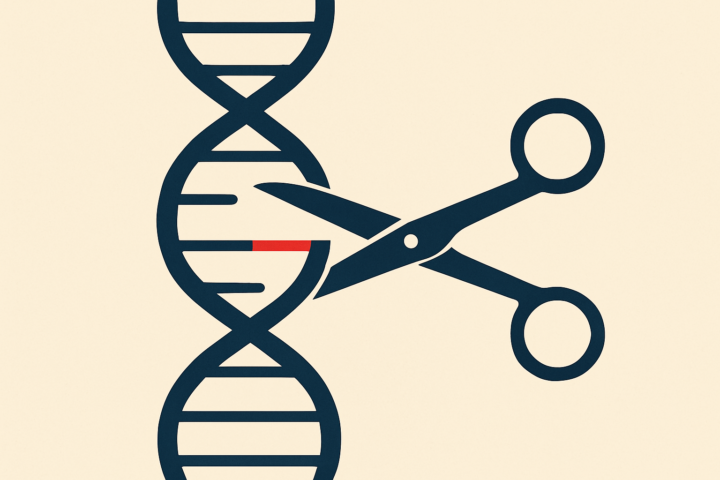
CRISPR lets scientists cut DNA at a chosen spot with unusual ease, but precision, delivery and ethics still bound what it can safely achieve.
If the universe were infinite and eternal, the night sky would blaze. Its darkness is a clue about cosmic age, light's finite speed, and expansion.