What CRISPR gene editing can — and can’t — do
CRISPR lets scientists cut DNA at a chosen spot with unusual ease, but precision, delivery and ethics still bound what it can safely achieve.

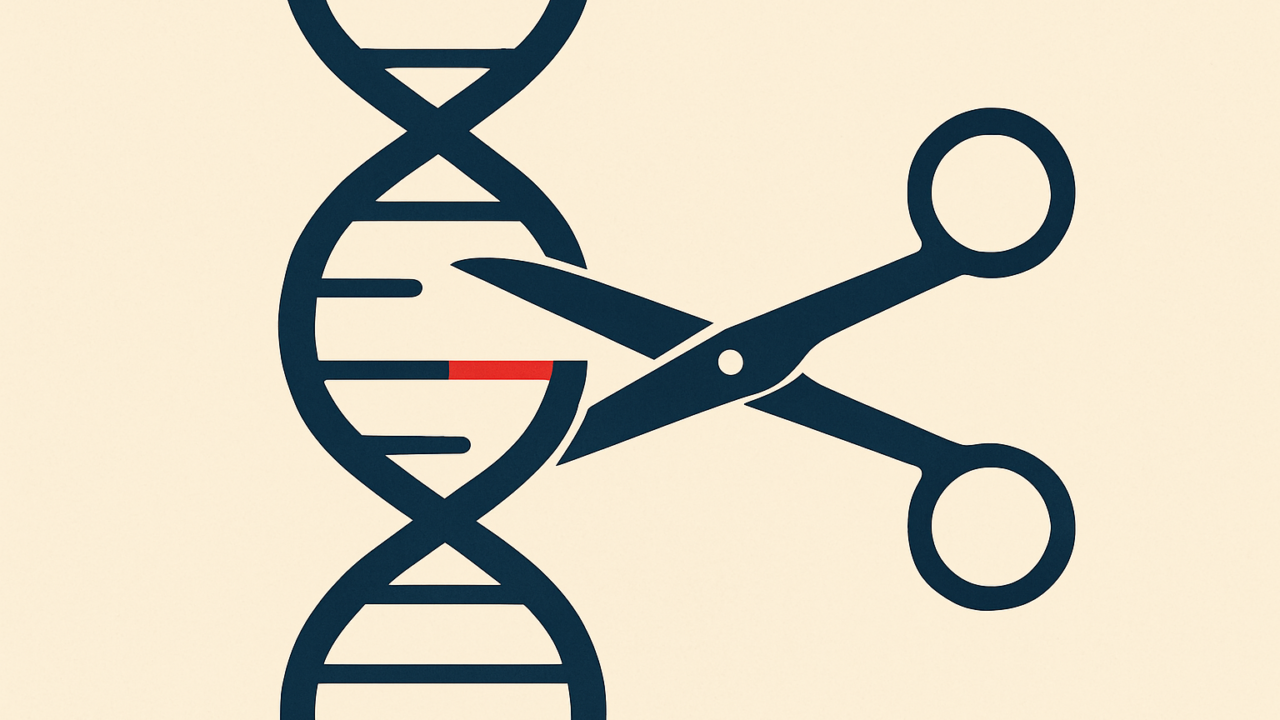
Few laboratory tools have moved from obscure biology to household name as quickly as CRISPR. It is often described as a pair of molecular scissors, and the comparison is fair as far as it goes. But the more useful question is not what CRISPR is. It is what CRISPR can actually do, and where its limits still lie.
CRISPR did not begin as a human invention. As the U.S. National Human Genome Research Institute explains, the technology was adapted from a natural genome-editing system that bacteria use to defend themselves against viruses. Researchers learned to repurpose that system to edit the DNA of many kinds of living cells.
How the editing works
The widely used version, CRISPR-Cas9, has two essential parts. The first is a short stretch of guide RNA, designed to match a specific sequence of DNA. The second is Cas9, an enzyme that cuts DNA. The guide RNA leads Cas9 to the matching spot in the genome, and Cas9 makes a cut across both strands of the DNA double helix.
What happens next depends on the cell’s own repair machinery, not on CRISPR itself. According to MedlinePlus Genetics, a service of the National Library of Medicine, once the DNA is cut the cell’s natural repair processes take over, and scientists exploit those processes to add, remove, or change genetic material at the cut site. One repair pathway tends to disable, or knock out, a gene. Another, supplied with a template, can insert a new sequence.
The reason CRISPR spread so fast is practical. Compared with earlier editing methods, MedlinePlus notes, it is faster, cheaper, more accurate, and more efficient. That combination put genome editing within reach of ordinary laboratories rather than a handful of specialists.
What it can do today
The clearest successes are in diseases caused by a single, well-understood gene. The landmark example is real and recent. In December 2023, the U.S. Food and Drug Administration approved Casgevy, the first therapy in the United States to use CRISPR gene editing, for sickle cell disease in patients aged 12 and older. The treatment edits a patient’s own blood stem cells to raise production of fetal haemoglobin, which can ease the painful crises the disease causes. The same therapy was later approved for a related blood disorder, transfusion-dependent beta thalassemia.
Beyond approved therapies, CRISPR is a workhorse of research. Scientists use it to switch genes on or off to learn what they do, to build cell and animal models of disease, and to screen for genes involved in conditions such as cancer. In agriculture and basic biology, it has been applied across bacteria, plants, and animals.
Where the limits are
The most discussed limitation is precision. Cas9 is guided by a short sequence, and it can tolerate some mismatches, which means it sometimes cuts at unintended sites that resemble the target. These are called off-target effects. Reviews indexed by the National Institutes of Health describe off-target cutting as among the most significant challenges in the field, because an unwanted edit could, in principle, disrupt a healthy gene.
Two further constraints matter as much as precision:
- Delivery. Editing cells inside the body means getting the CRISPR machinery to the right tissue. The current sickle cell approach sidesteps this by editing cells outside the body and returning them, but many target tissues are far harder to reach.
- Complex traits. Most common conditions, from heart disease to most cancers, involve many genes and environmental factors. Editing one gene rarely addresses them, so single-gene disorders remain the natural early targets.
There is also a firm line that science and law draw together. Most editing today is done on somatic cells, the body’s non-reproductive cells, so changes affect only the treated patient. Editing the germline, meaning sperm, eggs, or embryos, would pass changes to future generations. MedlinePlus notes that germline and embryo editing are currently prohibited in the United States and many other countries, reflecting deep safety and ethical concerns.
A tool, not a cure-all
It is worth holding two ideas at once. CRISPR has already produced an approved therapy that can transform lives, which would have sounded like science fiction a generation ago. And it remains an early technology whose safety in humans is still being established, constrained by off-target risk, delivery hurdles, and the biological reality that most traits are not governed by a single gene.
The honest summary is that CRISPR has made precise genetic change far easier than it used to be, without yet making it easy or risk-free. What it can do is genuine. What it cannot yet do safely is just as important to understand.

Priya Nair
Priya Nair covers science and health for Tilias News, translating peer-reviewed research and public-health guidance into plain English. She is careful to separate what the evidence shows from what is still uncertain.


