What a Central-Bank Interest Rate Actually Controls
A central bank sets one short-term rate. From there, the cost of money ripples through loans, savings and the wider economy.

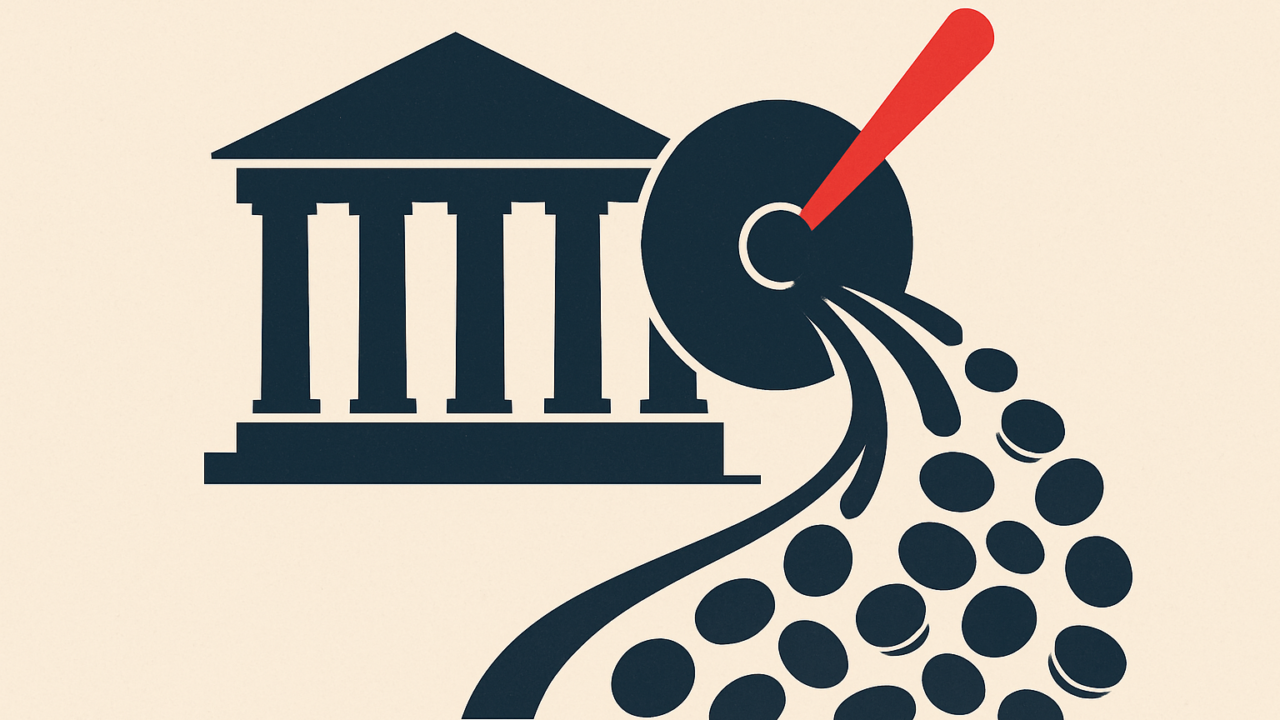
When a central bank “raises rates,” it changes a single number: the interest rate at which banks lend to and borrow from one another for very short periods, usually overnight. That one figure is the lever. Everything else in the headlines — mortgage costs, savings yields, business borrowing — moves in response, not by direct order.
Understanding what that rate does, and what it does not do, is the difference between reading monetary policy as a dial the public can interpret and treating it as a black box.
The one rate a central bank actually sets
Central banks do not set the interest rate on your mortgage or your credit card. They set a benchmark policy rate that governs the cost of the shortest-term, lowest-risk borrowing in the financial system. In the United States this is the target range for the federal funds rate, set by the Federal Reserve. The European Central Bank steers its own set of key rates for the euro area, and the Bank of England sets Bank Rate.
This benchmark is the floor on which other rates are built. Because banks can lend to each other at roughly the policy rate, they have little reason to lend to anyone else for less. So every other loan in the economy — to a homebuyer, a carmaker, a government — is priced as the policy rate plus a margin for time and risk.
When the central bank moves the benchmark, it shifts the entire structure of rates that sits on top of it. The move is small and precise; the consequences are broad.
How the change spreads through the economy
Economists call the path from the policy rate to everyday prices the transmission mechanism. It works through several channels at once.
- Borrowing costs. When the benchmark rises, banks pass higher costs into new loans. Variable-rate borrowing adjusts fastest; fixed-rate loans reset as they are renewed or refinanced.
- Saving and spending. Higher rates raise the reward for saving and the cost of borrowing, which tends to cool spending and investment. Lower rates do the reverse.
- Asset prices and credit. Rates influence the value of bonds, shares and property, and how freely banks extend credit, which feeds back into how much households and firms are willing to spend.
None of this is instant. Central banks generally describe these effects as operating with long and variable lags, meaning a rate change today shapes the economy over the following months and years, not the following week. That delay is one reason policymakers act before a problem is fully visible, and why their decisions are so often debated.
Why the rate moves at all
Most major central banks operate under a mandate set by law. A common goal is price stability — keeping inflation low and steady — and many central banks publish an explicit inflation target to anchor expectations. Some, including the Federal Reserve, also carry a mandate to support maximum employment, giving them what is often called a dual mandate.
Within that framework the logic is straightforward. When the economy runs hot and inflation pushes above target, raising rates makes borrowing dearer and demand softer, easing price pressure. When the economy weakens and unemployment threatens to climb, cutting rates makes credit cheaper and supports activity.
The rate is not a reward or a punishment. It is a thermostat for the price of money, turned up or down to keep the broader economy near a target.
Crucially, the central bank is reacting to conditions, not creating them by decree. A rate cut cannot force anyone to borrow, and a rate rise cannot by itself guarantee lower prices if other forces — energy shocks, supply disruptions, fiscal policy — are pushing the other way.
What the rate cannot do
The policy rate is a powerful but blunt instrument, and its limits matter as much as its reach.
It is economy-wide, so it cannot target one sector while sparing another. A rate set to cool an overheating housing market also raises costs for every business in the country. It works on demand — how much people and firms want to spend — far more directly than on supply, so it is poorly suited to inflation driven by shortages or disrupted production.
It also cannot act with precision in time. Because of those lags, a central bank that waits for certainty has usually waited too long, while one that moves aggressively risks overshooting. Much of the public commentary around any decision is really an argument about this timing, not about the direction.
Finally, the policy rate is one tool among several. Governments set tax and spending policy, and central banks have other instruments, including buying or selling assets, that work alongside the headline rate. The interest rate is the most visible lever, but it is not the only one, and it does not operate alone.
Seen plainly, a central-bank interest rate is a single short-term price that the central bank controls directly and the rest of the economy inherits indirectly. It sets the cost of money. What households, businesses and markets then do with that money is the part no central bank can fully command.

Daniel Hart
Daniel Hart writes about business and the economy for Tilias News — markets, companies, trade and the policy decisions behind them. He aims to explain why the numbers matter, not just what they are.


