Carbon Offsets: What They Are, and Why They’re Controversial
Buying a credit to cancel out emissions sounds simple — but the value of an offset depends on claims that are hard to verify.

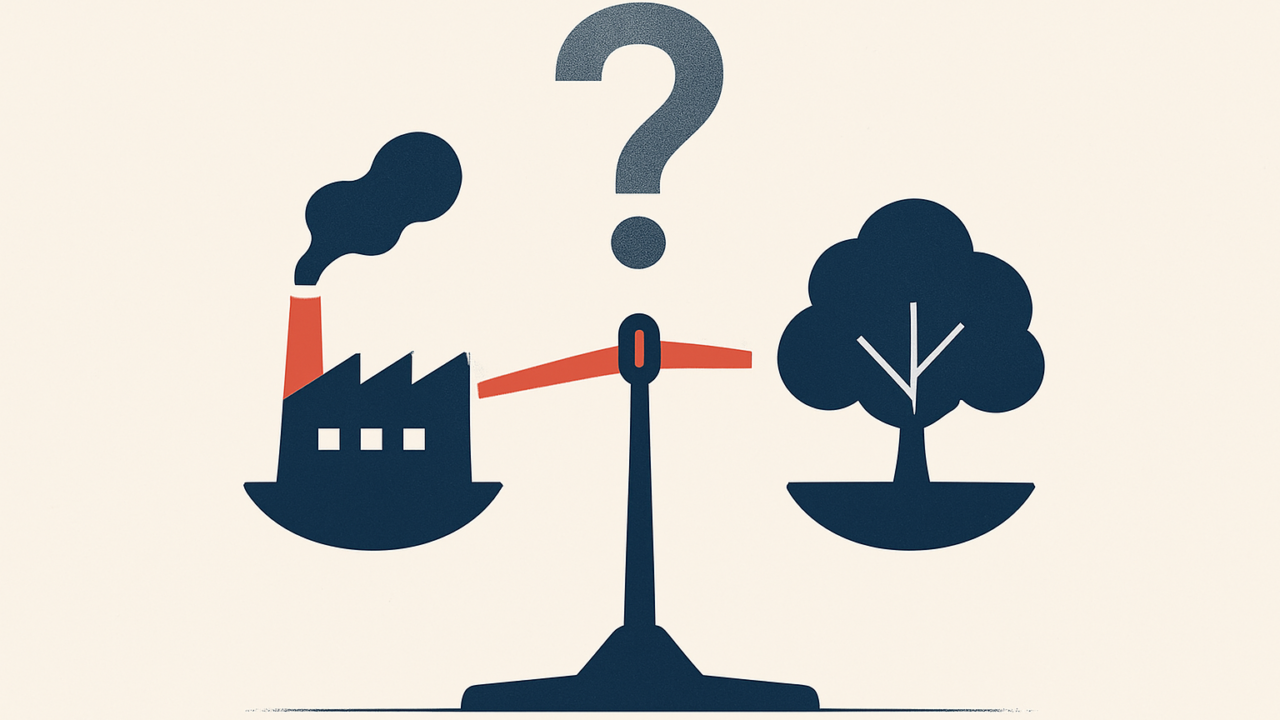
The idea behind a carbon offset is appealingly simple. An activity releases greenhouse gases that are difficult to eliminate, so instead the emitter pays for an equivalent amount of emissions to be reduced or removed somewhere else. The two are meant to cancel out. In practice, the simplicity hides a set of hard questions that have made offsets one of the most debated tools in climate policy.
What a carbon offset actually is
A carbon offset is a tradable certificate representing the reduction, avoidance, or removal of one metric ton of carbon dioxide, or an equivalent amount of another greenhouse gas. Buying one is meant to compensate for a ton emitted elsewhere.
Offsets are generated by projects that claim to keep carbon out of the atmosphere or pull it back in. Common categories include:
- Forestry and land use — planting trees or protecting existing forests that would otherwise be cleared.
- Renewable energy — building wind, solar, or hydro capacity in place of fossil-fuel generation.
- Methane capture — collecting emissions from landfills, farms, or other sources rather than letting them escape.
- Direct removal — newer methods that capture and store carbon dioxide more permanently.
It helps to distinguish two systems. In compliance markets, governments cap emissions and regulated entities may use approved offsets to meet legal obligations. In voluntary markets, companies and individuals buy offsets by choice, often to support climate claims. Much of the controversy centers on the voluntary market, where standards vary.
The core problem: proving a counterfactual
An offset’s entire value rests on a claim about what would have happened otherwise. That claim is called additionality, and it is the central difficulty. A credit is only meaningful if the emission cut would not have occurred without the money the offset provided.
If a wind farm would have been built anyway, or a forest was never truly at risk of being cut down, then selling credits for it does not remove any extra carbon from the atmosphere. It simply lets the buyer keep emitting while pointing to a reduction that was always going to happen. Because additionality depends on an unobservable alternative reality, it is genuinely hard to prove.
Permanence and double-counting
A second problem is permanence. Carbon dioxide can remain in the atmosphere for a very long time, so an offset ideally locks carbon away for an equally long time. Forests are vulnerable here: a stand of trees credited as stored carbon can later burn in a wildfire, fall to disease, or be logged, releasing the carbon back into the air. The reduction may prove temporary even though the emission it offset is effectively permanent.
A third issue is accounting. If both a project developer and the country it sits in claim the same reduction, or if a credit is sold more than once, the same ton gets counted twice. Robust registries and verification are meant to prevent this, but oversight in the voluntary market has been uneven.
Investigations by journalists and researchers have found that some credits, particularly in forest protection, represented far smaller real-world reductions than claimed. Such findings have sharpened scrutiny of the whole sector.
The deeper criticism
Beyond the technical concerns lies a more fundamental objection. Critics argue that offsets can become a license to avoid harder changes — a way to claim climate progress without actually cutting one’s own emissions. The term “greenwashing” describes marketing that overstates environmental benefit, and offsets are a frequent vehicle for it.
Mainstream climate assessments are clear that the primary task is to reduce emissions at the source. The IPCC frames the global challenge in terms of deep, sustained cuts across energy, industry, and land use, with carbon removal playing a complementary role rather than a substitute one.
Reaching and sustaining net zero global anthropogenic CO2 emissions requires deep reductions in emissions, alongside carbon dioxide removal.
Does this make offsets useless? Not necessarily. Supporters argue that high-quality offsets can channel money toward genuine climate projects and put a price on carbon that would not otherwise exist. The disagreement is less about whether the concept can work and more about whether a given credit is real, additional, permanent, and counted only once.
That is why scrutiny has shifted toward quality and verification: stronger standards, independent checks, and a preference for removals that store carbon durably over vague avoidance claims. The consensus across mainstream analysis is that offsets, at best, complement emission cuts and cannot replace them.
The bottom line
A carbon offset is a promise that a ton emitted in one place was cancelled by a ton avoided or removed in another. The promise is only as good as the evidence behind it, and that evidence — additionality, permanence, and honest accounting — is difficult to establish. Offsets can support real climate action, but they work as a supplement to cutting emissions, not as a way around it.

Margaret Ellison
Margaret Ellison is the editor-in-chief of Tilias News. She leads the newsroom's coverage of world affairs and oversees editorial standards across every section, with a focus on clear, sourced reporting that respects the reader's time.


